Young children don’t understand how to avoid allergens, therefore adults in the community need to eliminate the risks and secure a safe environment for all at playgroup.
Allergy occurs when a person’s immune system reacts to substances (allergens) in the environment that are harmless for most people. Allergens can include pollen, mould, dust mites, animal dander or saliva, insect stings or bites, medication, food, and latex. Allergic disease also includes conditions such as eczema, hay fever, allergic conjunctivitis, and allergic asthma. The most severe form of allergic reaction is anaphylaxis.
Anaphylaxis affects either a person’s airway and how they breathe, and/or the way blood is moved around the body (blood pressure). It is potentially life threatening and must always be treated as a medical emergency. Find out more here: Anaphylaxis – Allergy & Anaphylaxis Australia
A food allergy is an immune system response that the body mistakenly believes is harmful. The most common allergens are cow’s milk (dairy), egg, peanut, tree nuts, sesame, fish, crustacean, mollusc, wheat and soy. There are more than 170 foods known to have triggered allergic reactions. Allergic reactions usually occur quickly – within minutes (although they can take up to 2 hours). Other reactions to foods may be delayed. How to recognise an allergic reaction – Prevent Allergies
In Australia, food allergy is common and estimated to affect around 1 in 10 babies, 1 in 20 teens and 1 in 50 adults.
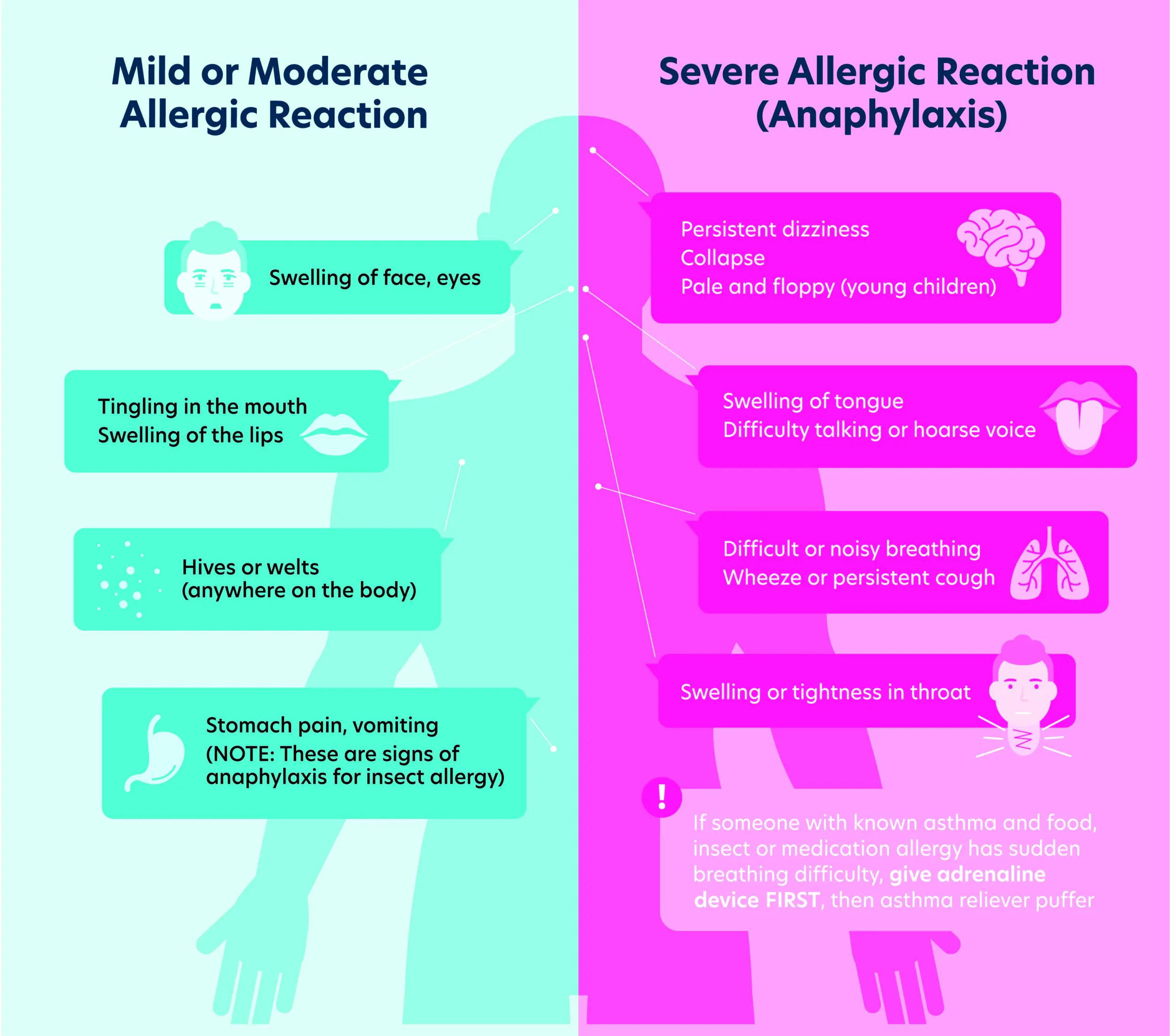
Image: https:// allergyfacts.org.au/signs-and-symptoms-of-an-allergic-reaction/
When you know that children have food allergies it is best that the whole playgroup put some of the following steps in place to protect everyone:
Playgroup WA has been supporting, servicing and establishing playgroups throughout Western Australia since 1972.